Vistas and Cedar Trees
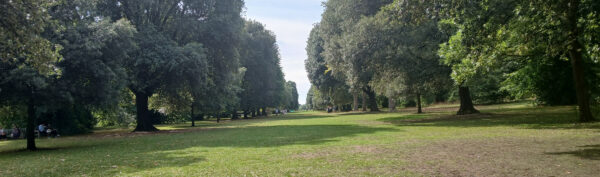
How to lay out a Garden
In 1845, William Nestfield, one of the leading garden architects of the day, was given the task of bringing some order to the mass of grounds that formed the Kew Gardens.
He laid out two vistas to run from the Palm House, one, the Pagoda Vista to run to the Chinese pagoda on the western side of the Garden, and the other, the Syon Vista leading from the Palm House northward to the boundary of the gardens at the River Thames, and then beyond with a view of Syon House, the London pied a terre of the Duke of Northumberland.
Here we see a view of the Syon Vista, though the Syon House is not actually visible
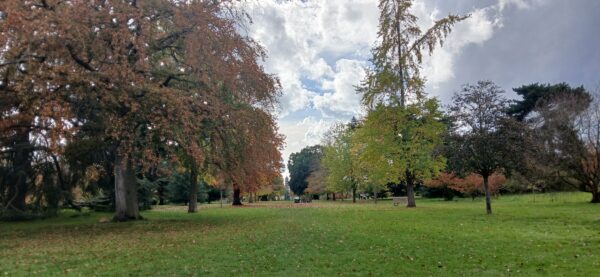
The Pagoda Vista, with the Pagoda at the end of it.
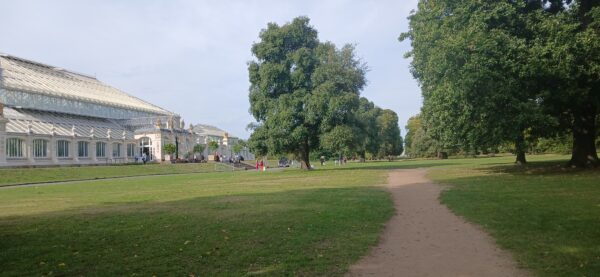
View down the pagoda vista about halfway along, with the Temperate house to the left
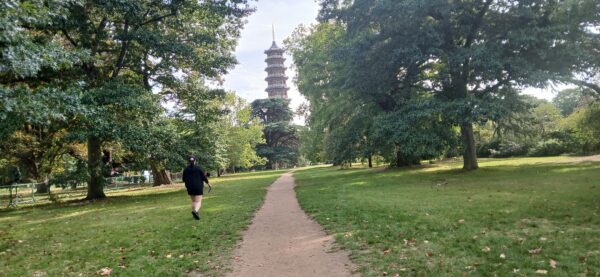
Towards the end of the vista. But note how the giant cedar tree blocks out the lower part of the pagoda.

The giant cedar of Lebanon, one of the largest trees in the gardens
. When the Vista was being laid out, they realised it would be in the way, and they wanted to move it to one side, as they had done with the Luscombe oak, but they decided it was too big to be moved, so they left it there, now bigger than ever.