After forty seven years living in our wonderful family home at 9 Nassington Road in Hampstead, we have moved to a cottage in Kew, in West London. We want to be nearer the grandchildren.
Let’s start by looking at our old home, at 9 Nassington road
This is number 9 Nassington Road, where we live very happily for 47 years. We did not actually launch Current Archaeology from here —we spend our first three years in Islington at 128 Barnsbury Road, a small undeveloped Georgian terraced house. It had possibilities as they say, but it would not really have been big enough for a growing family, so my parents ‘downsized’ and enabled us to move to a somewhat larger house a couple of miles to the west in Hampstead.
It was an inspired choice, for Nassington Road has been a wonderful home, both for bringing up the children and for producing Current Archaeology, and it enabled me to participate in one of the great joys of life – bringing up our children.
It was in a wonderful situation on the southern slopes of Hampstead Heath – the Heath was just 200 yards away. The house faced north – this photo was taken in the very early morning —and from the front it had three storeys.
However from the back it was a different story.
The house was on sloping ground so one entered to the ground floor and then went down to the basement floor, which entered straight onto the garden.
There is the view of the house from the garden. The black plates were inserted following the very dry summer of 1976 when we were very worried that the back wall shows signs of movement. We need not have worried – the back wall has been rock solid ever since.
GMT
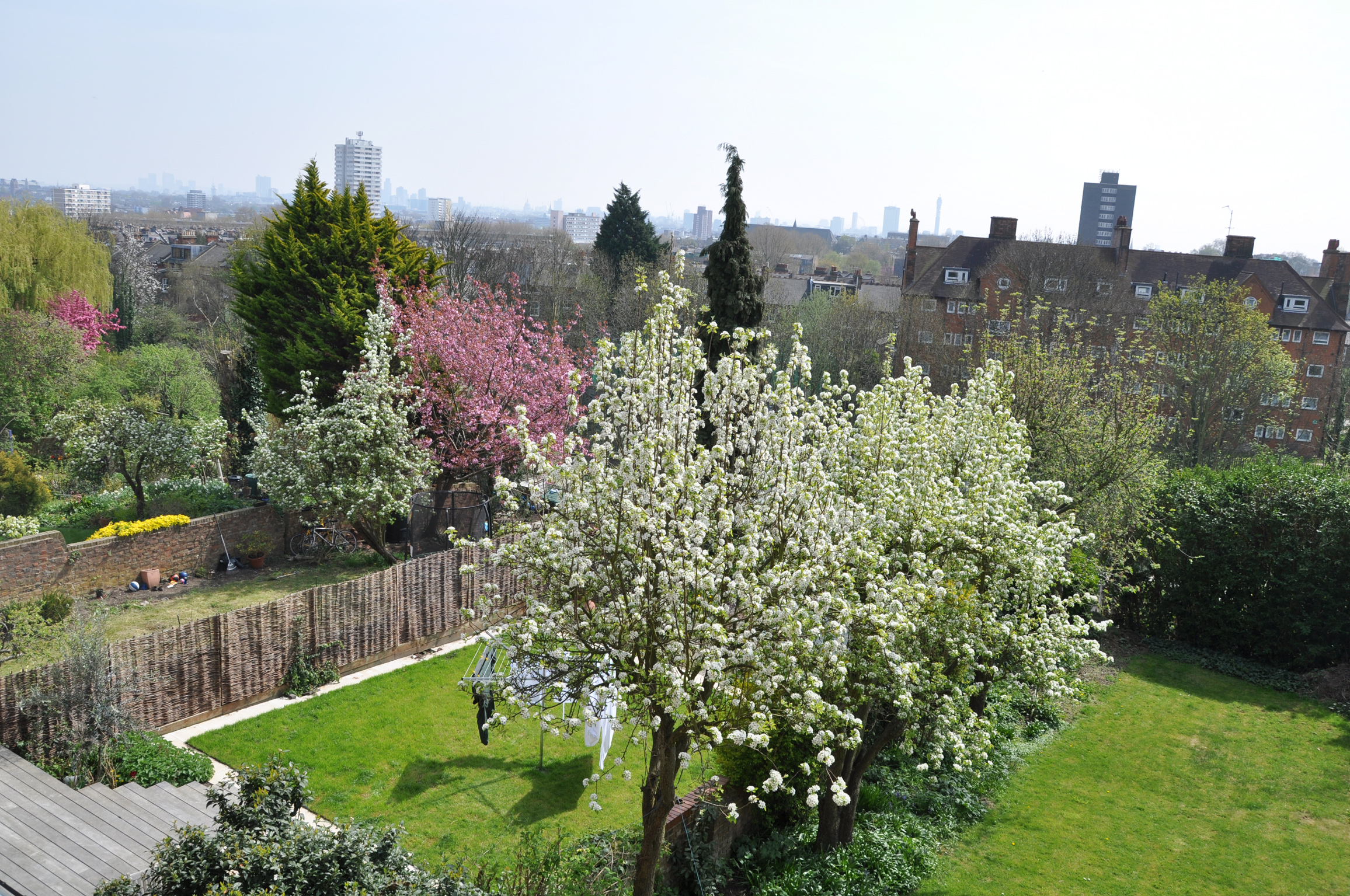
However, if you look out from the windows, you can see our wonderful view. The greatest advantage of Nassington road is that looking south, you can see the whole glory of London. To see the some of the features in detail, click here
Was it really 50 years ago that I wrote a major article in Current Archaeology on the excavation of the Roman Palace at Fishbourne? The following year a superb Museum was constructed over the remains, so in CA 340, Carly produced a celebratory article on Fishbourne at 50, with a wonderful article of reminiscences by Barry Cunliffe himself. And on Saturday 30th June 2018, a party was held to celebrate, and we were invited down on a wonderfully balmy day in the middle in a long spell of sunny weather.
The highlight was a wonderful speech by Barry Cunliffe himself giving some of the more indiscreet details that were omitted from the article in Current Archaeology. He began with the saga of the dodgy digger driver who dug a trench for a water pipeline, but backfilled it very crudely, leaving the lower spoil on the surface, so when the local society fieldwalked over the field, they found large amounts of Roman material, particularly mosaic tesserae.
Barry Cunliffe in full flow reminiscing about the original excavations, 50 years ago
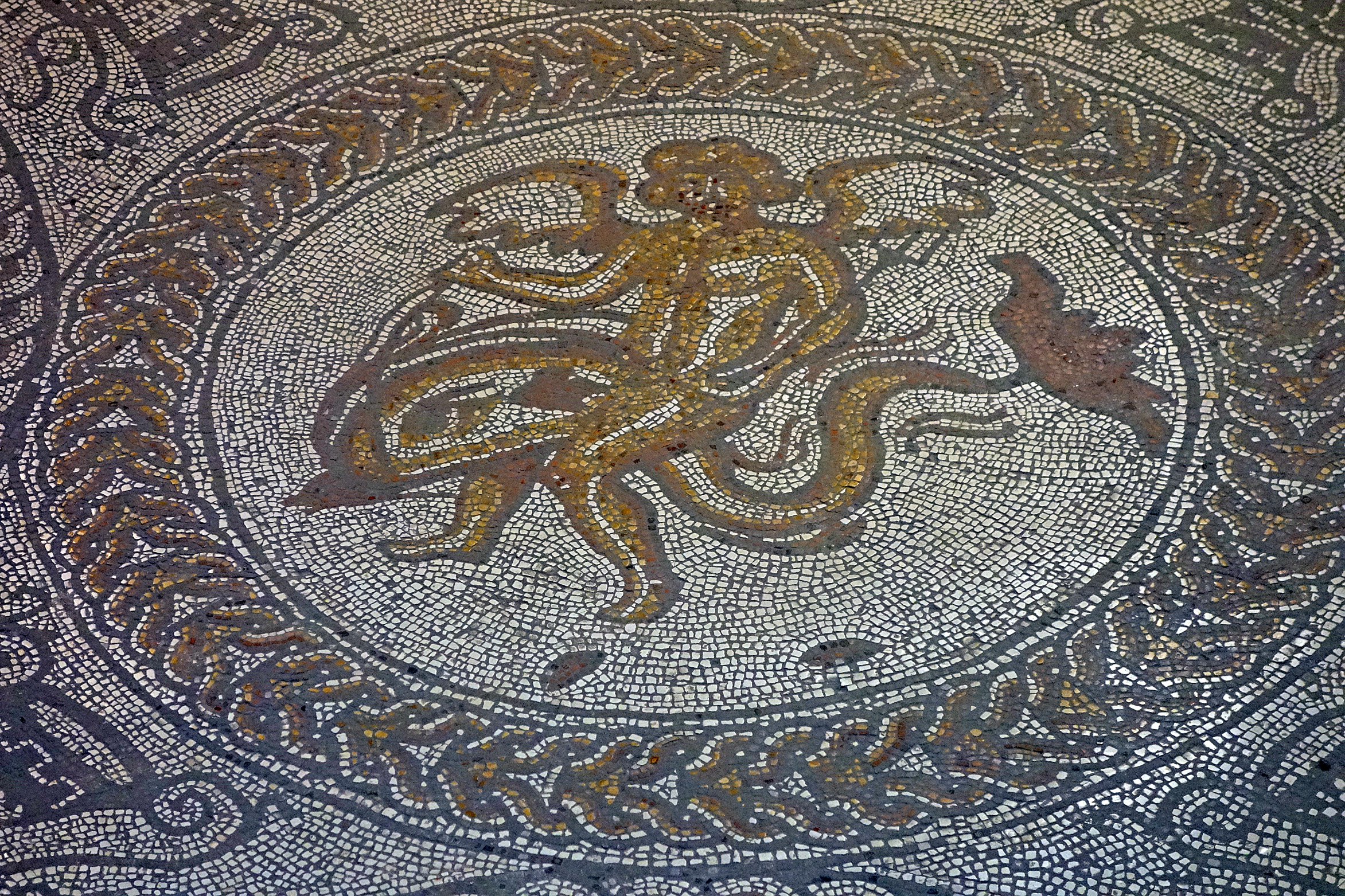
It was clear that there was a major building, but they realised that the field was in the designated path for a major trunk road along the South Coast. Local volunteers led by Margaret Rule excavated, and a Cambridge undergraduate called Barry Cunliffe was appointed as director. The main initial task was to avert the motorway so the first objective was to uncover as much of the building as possible. On the last day they hit ‘treasure’ — the Dolphin mosaic, one of the finest mosaics ever uncovered in this country — and the front cover of CA 340: the line of the road was rerouted
Inside the cover building at Fishbourne showing some of the magnificent mosaics
Fishbourne Cupid on a dolphin mosaic
It was only in the next season that they were able to get down to a proper excavation with proper archaeological objectives of dating and interpreting the site. There followed eight or nine seasons of excavations, all done by volunteers, mostly in their late teens or early 20s between 80 and 100 in all, accommodated first in an abandoned cinema then in a local school. Barry maintained firm discipline during the day, working from 8.30 to 5: what went on after hours was another matter.
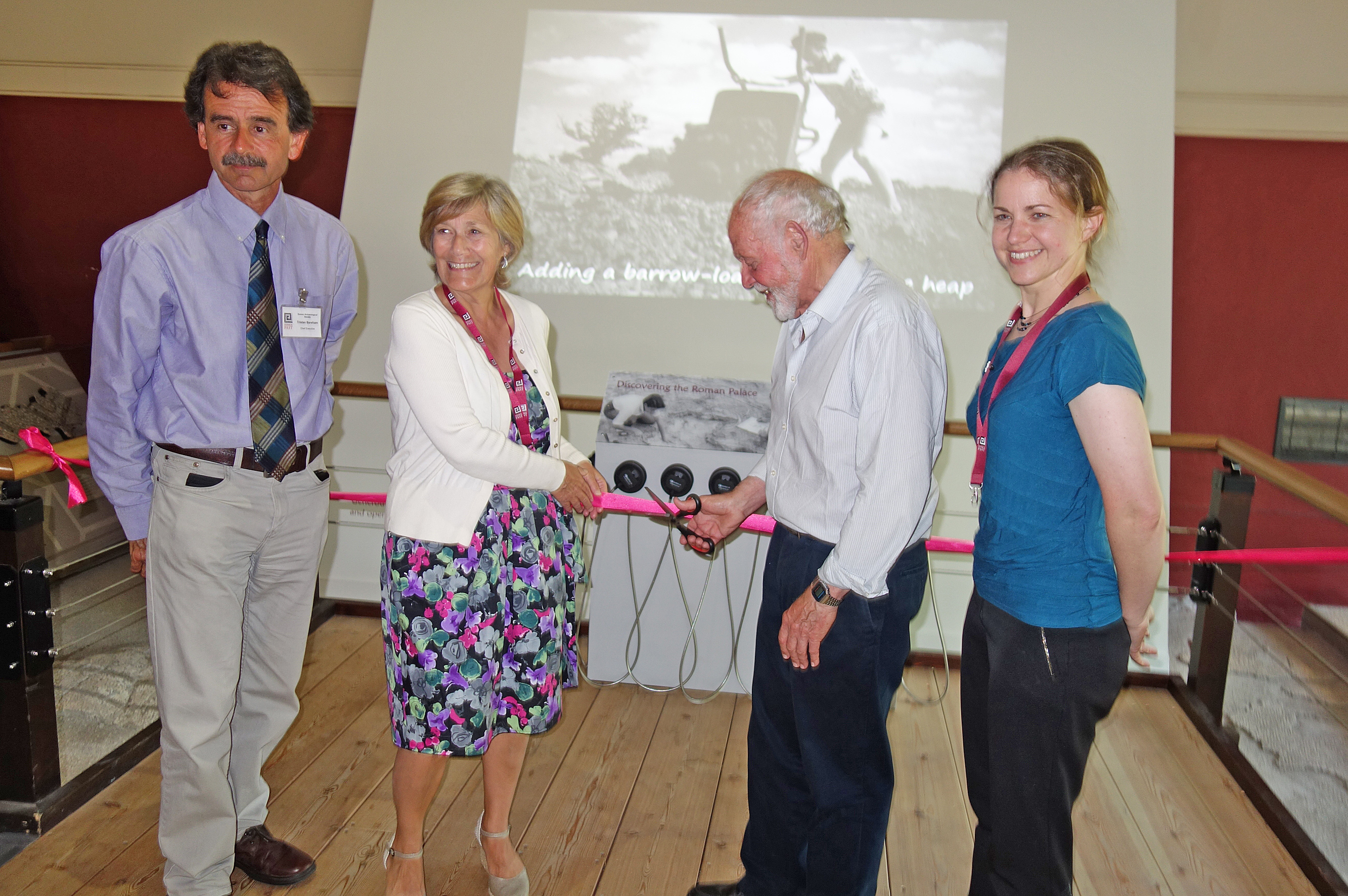
Barry Cunliffe cutting the ribbon for the opening of the Headley Trust viewing platform
Another stroke of luck was that one evening, just as he was locking up, an elderly gent appeared and asked if he could see around. Barry reluctantly showed him round, and the next day he was contacted by the Sunday Times saying that Sir Dennis Hamilton, the editor-in-chief had been very impressed by what he had seen, was there anything the Sunday Times could do to help? Barry was already in contact with two Sunday Times journalists, Kenneth Pearson and his (very pretty) girl-friend Pat Connor and between them they arranged for the Sunday Times to oversee the design and layout of the Museum and the whole site. Another stroke of Barry’s luck!
A further stroke of luck was a visit by Ivan Margery, a leading Sussex archaeologist and author of the standard guide to Roman Roads in Britain. He was also extremely wealthy and said that he wanted to donate a Roman villa to the society and had looked at a couple of possibilities already, but this seemed ideal. Could he purchase the site and donate it to the society? He approached the farmer, and bought the 12 acre field from him so that the dig could proceed on land that they owned. And this has formed the basis of the ability of the society to develop Fishbourne – it’s their own property.
The Collections and Discovery Centre at Fishbourne, a fine depository for all the finds made during the excavations
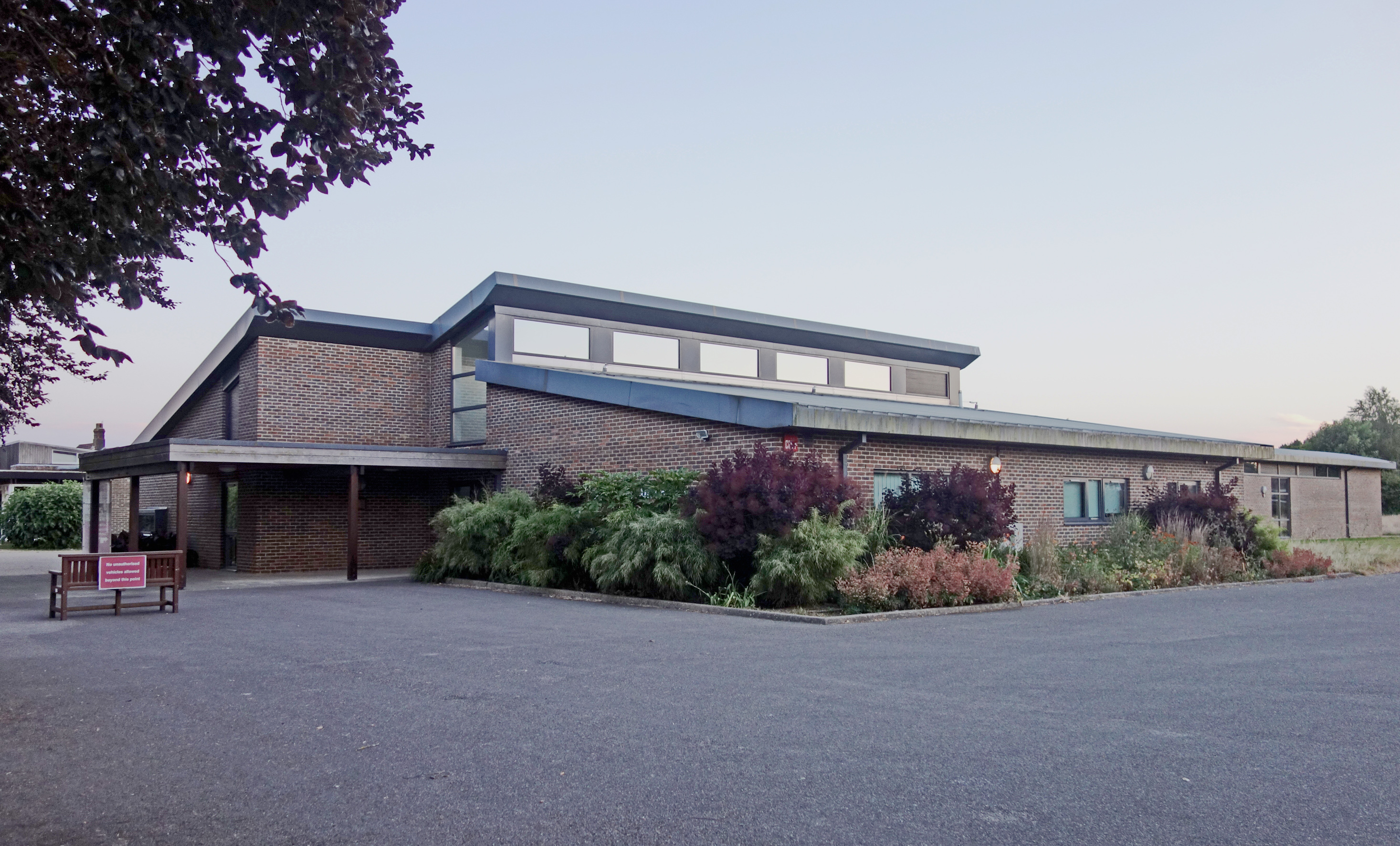
The main layout of the display remains essentially unchanged, but a lot of ancillary work has been done. A major problem was what to do with the finds from the excavations, which were kept in a shed, but now a magnificent new finds centre has been constructed at a cost of £3.75 million – £2.75 million from the Heritage Lottery Fund, the rest raised by the society. Of course it’s not called the finds shed any more, it’s called the Collections and Discovery Centre, and there are school room facilities for outside students.
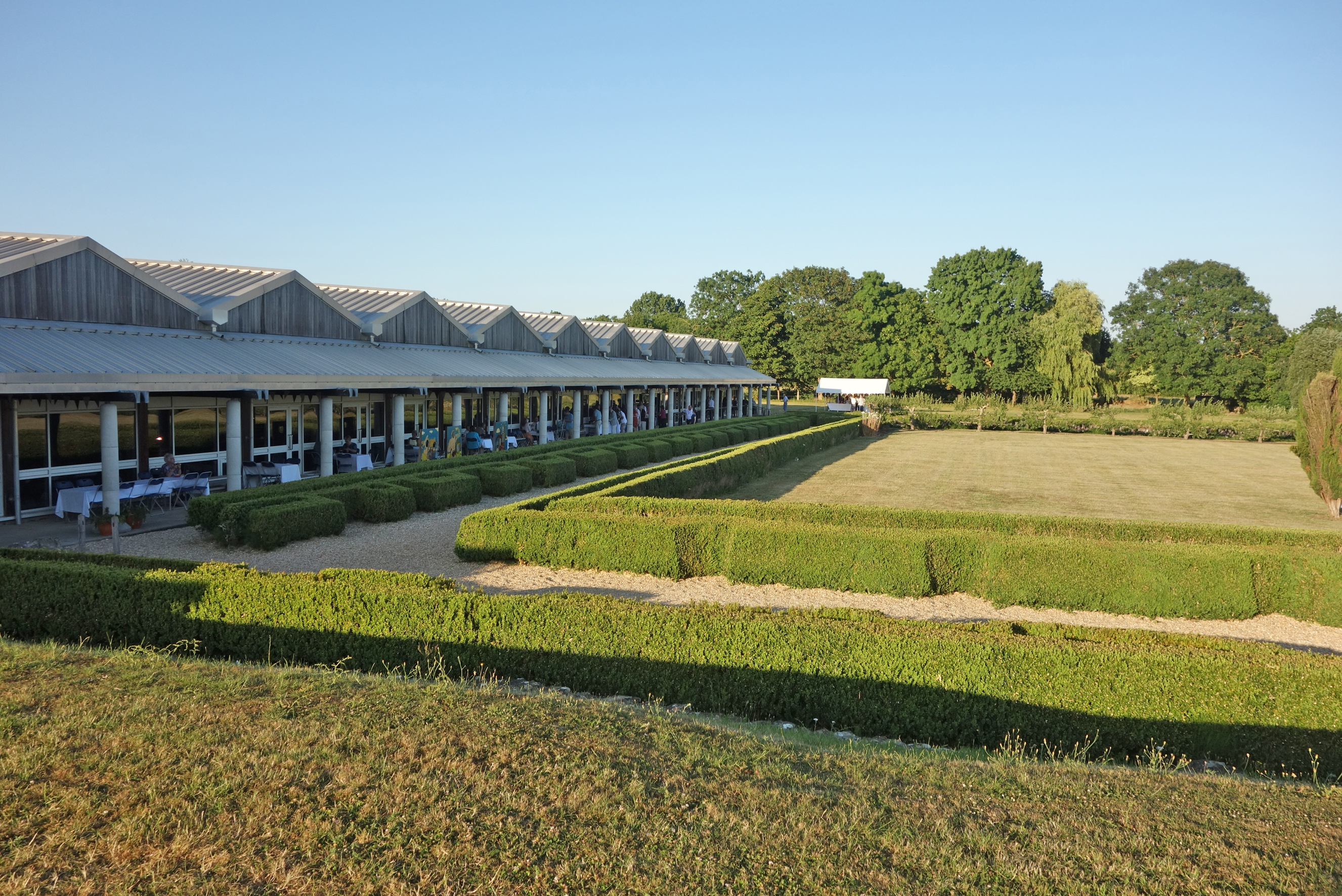
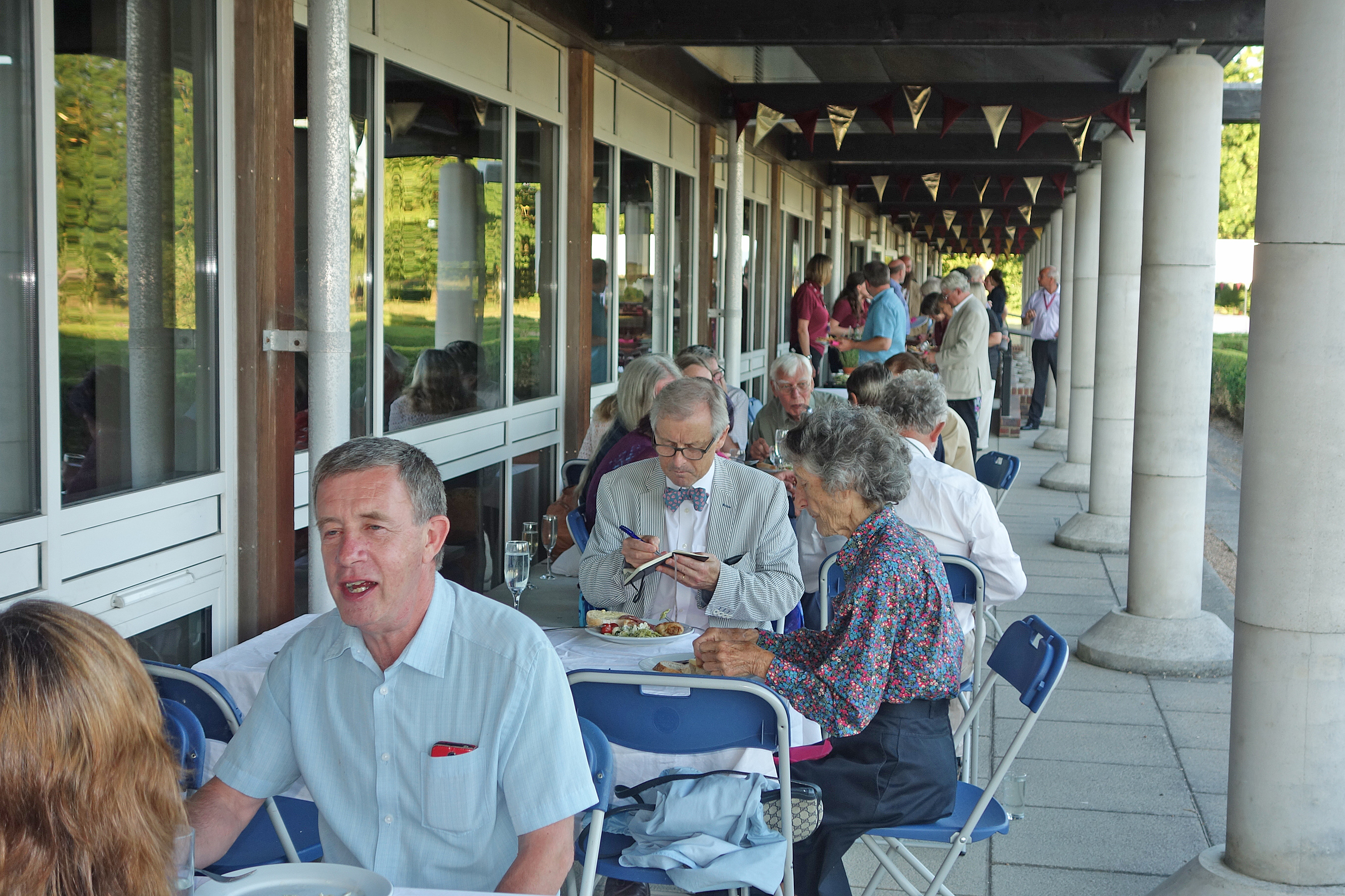
The new colonnade alongside the cover building, looking out over the gardens. A fine place for dining!
Another useful addition has been a fine colonnade outside the building which was the ideal place for our buffet supper.
The Sussex Archaeological Society is one of the richest archaeological societies. It owns five or six other properties in addition to Fishbourne, notably Lewes Castle, which is fast becoming a fashionable wedding venue. Running all the properties means a continuous round of fundraising, but I do wonder whether the English Heritage Trust, – the new body spun off from English Heritage to be in charge of all the English Heritage properties, should come down to Sussex to see how they operate and then wherever possible hive off their properties to county societies. Surely it would be better to have properties owned and operated by a local society rather than have everything done centrally?
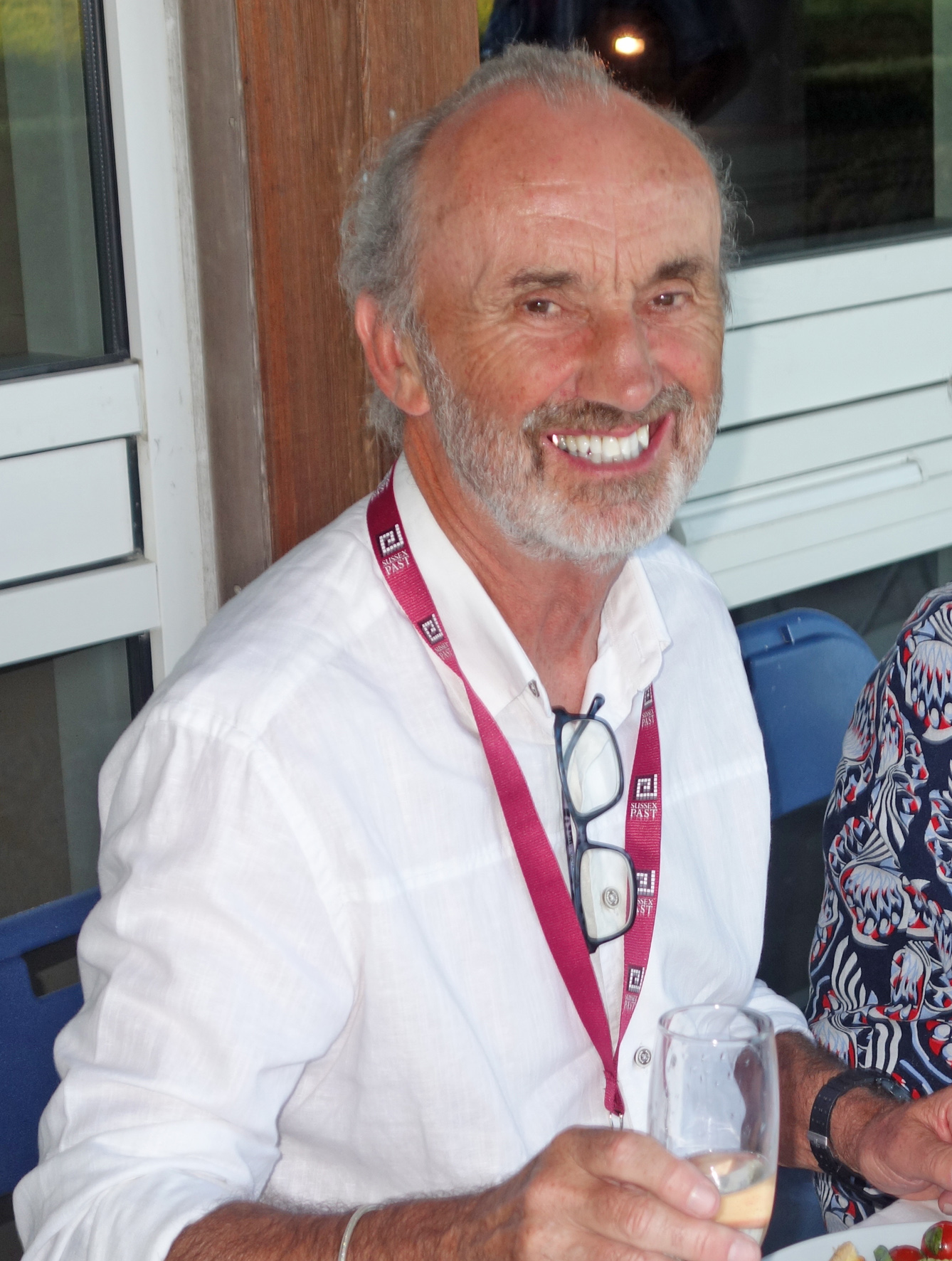
John Manley, the former chief executive of the Sussex Archaeological Society
And here is wonderful opportunity to meet friends old and new, notably John Manley , the former chief executive of the Society, now retired, and elevated to being a trustee, and also his successor, Tristan Barsham, and the Property Manager Katrina Burton and also David Baker who was the photographer on the excavations and who met his wife Evelyn in the traditional place for archaeologists to meet up, down in a cesspit.
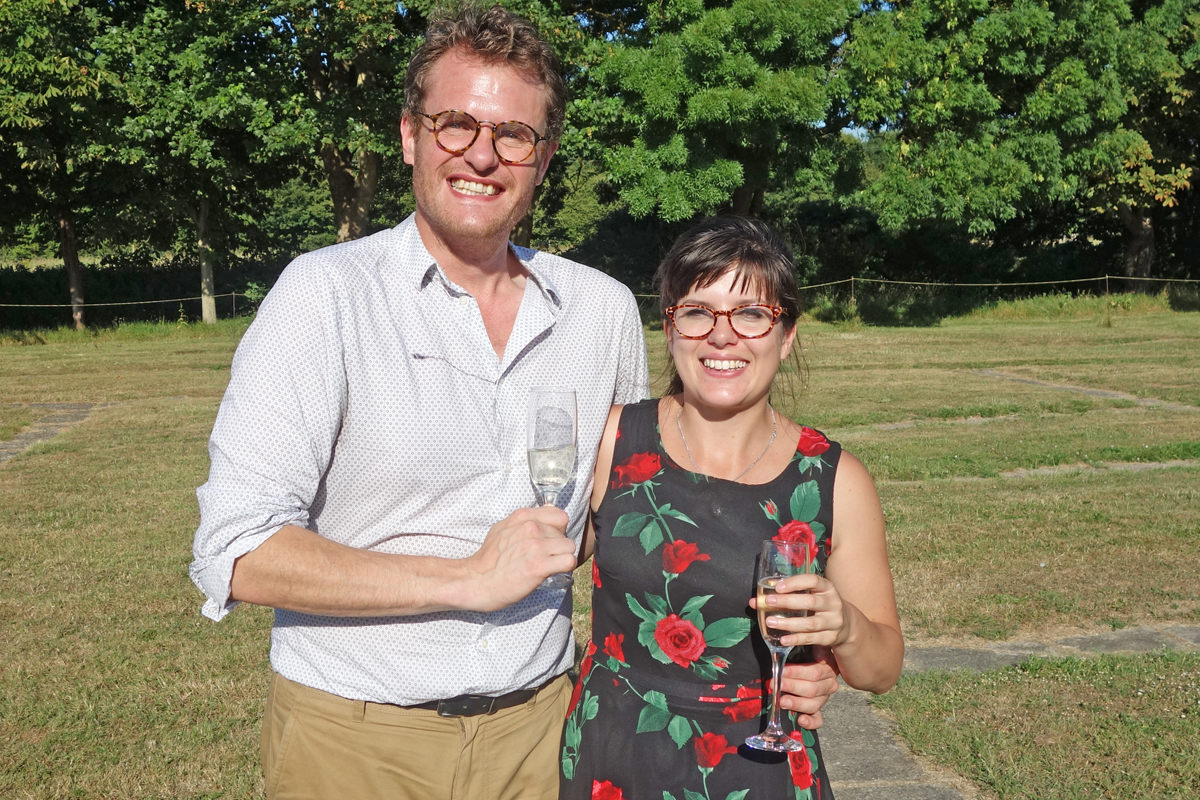
Carly Hilts, the editor of Current Archaeology, with her friend Simon.
I was also delighted to see Carly who came down from Current Archaeology, bringing a friend with her. Carly is a keen Gilbert and Sullivan addict – she sings with a local operatic society, and I have been hearing stories about a young man who also sings G and S. He came along too – all I can say is, I hope he learns a lot of archaeology fast!